

Method & Work
Method
From complete listening to technical restraint — every decision backed by a reason, never by habit.
The ear decides first
Every project starts with a complete listen, with no processing active — the whole track, start to finish, before a single fader moves. That first pass is where the diagnosis happens: where the energy is excessive, where definition is missing, what's already working and shouldn't be touched. An engineering decision made before that complete listen is usually a decision of habit, not necessity — and habit applied to the wrong track is the most common reason mastering ends up sounding generic.
Restraint is technique, not timidity
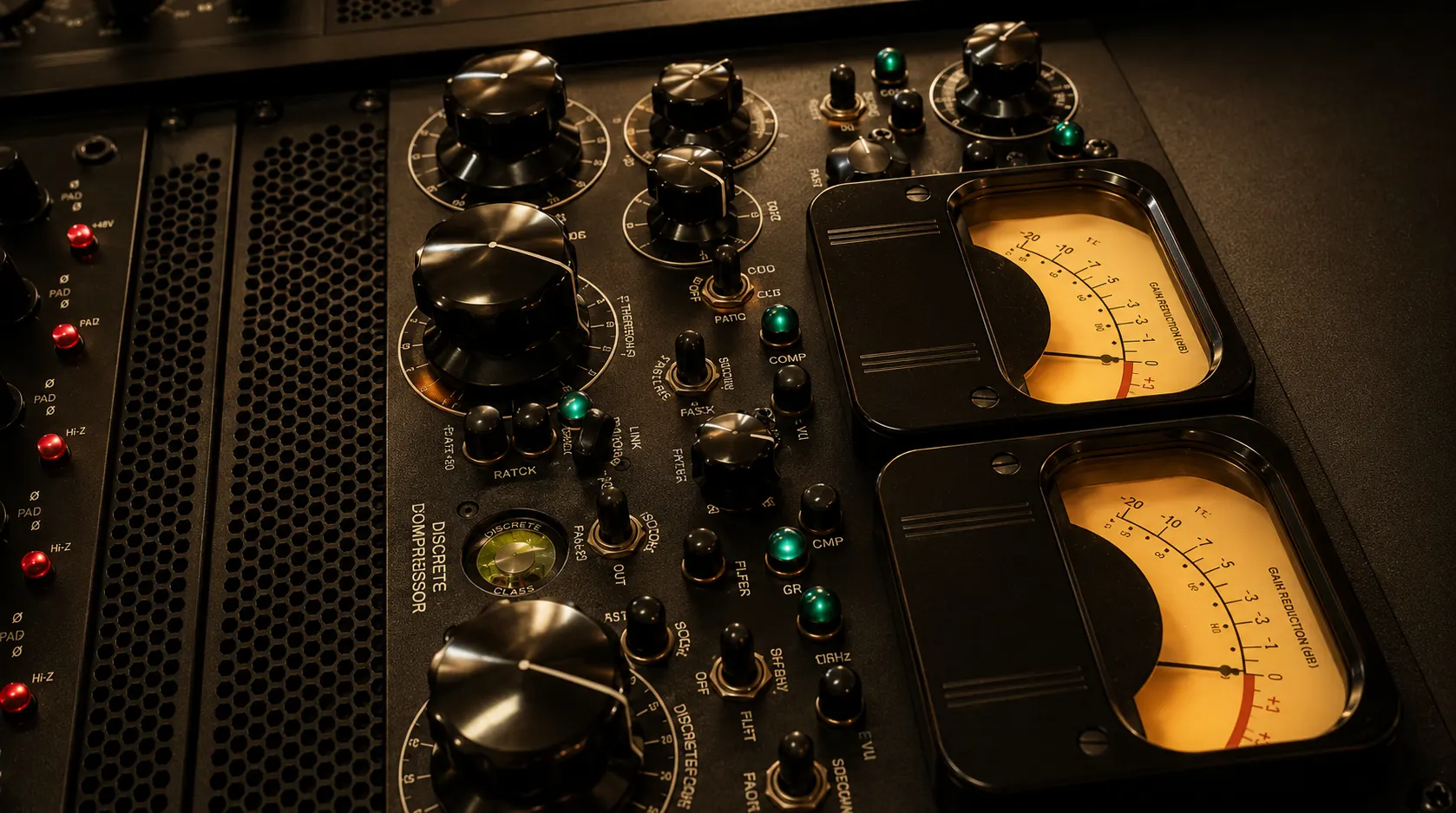
There's a constant temptation to over-process: if a tool exists, it can feel like it should be used. But the right processing is the minimum necessary for the track to become what it already is — not a collection of effects applied just because they're available. When a bus compression chain is making a real difference, it stays; when it's there out of habit, it goes. That discipline of removing what doesn't help is as much a part of the method as any EQ move.
What "analog inspiration" actually solves
It's not aesthetics for nostalgia's sake — it's a specific tool for a specific problem: cohesion. Tape-style saturation and compression build the sense that every element lives in the same sonic space, instead of sounding pasted side by side with no relationship to each other. It's the same reason this kind of processing shows up in so many reference productions in the electronic genre: it solves a problem of perceptual physics, not just taste.
Dynamics are information, not just volume
A loud master with no dynamics loses the information that made the drop work as a drop — if everything's already maxed out before it gets there, there's no distance left to travel. Dynamic control is built in layers, from the mix to the final limiter, so competitive loudness doesn't cost the track its breathing room. The target shifts with the destination: what works on a streaming playlist, heard in a controlled environment, isn't what works on a club sound system, where the track is competing with crowd noise and high playback volume.
The test that has no shortcut
A track is only finished when it holds up outside the room it was processed in. The check covers mono compatibility, phase coherence, and how the low end behaves on limited systems — because those are exactly the systems most people will hear the music on first. That's why a track never gets finalized by listening in a single environment: every system reveals a different problem, and the goal is for the track to hold its identity across all of them at once — from headphones to the club's PA system.
Ready to get started?